

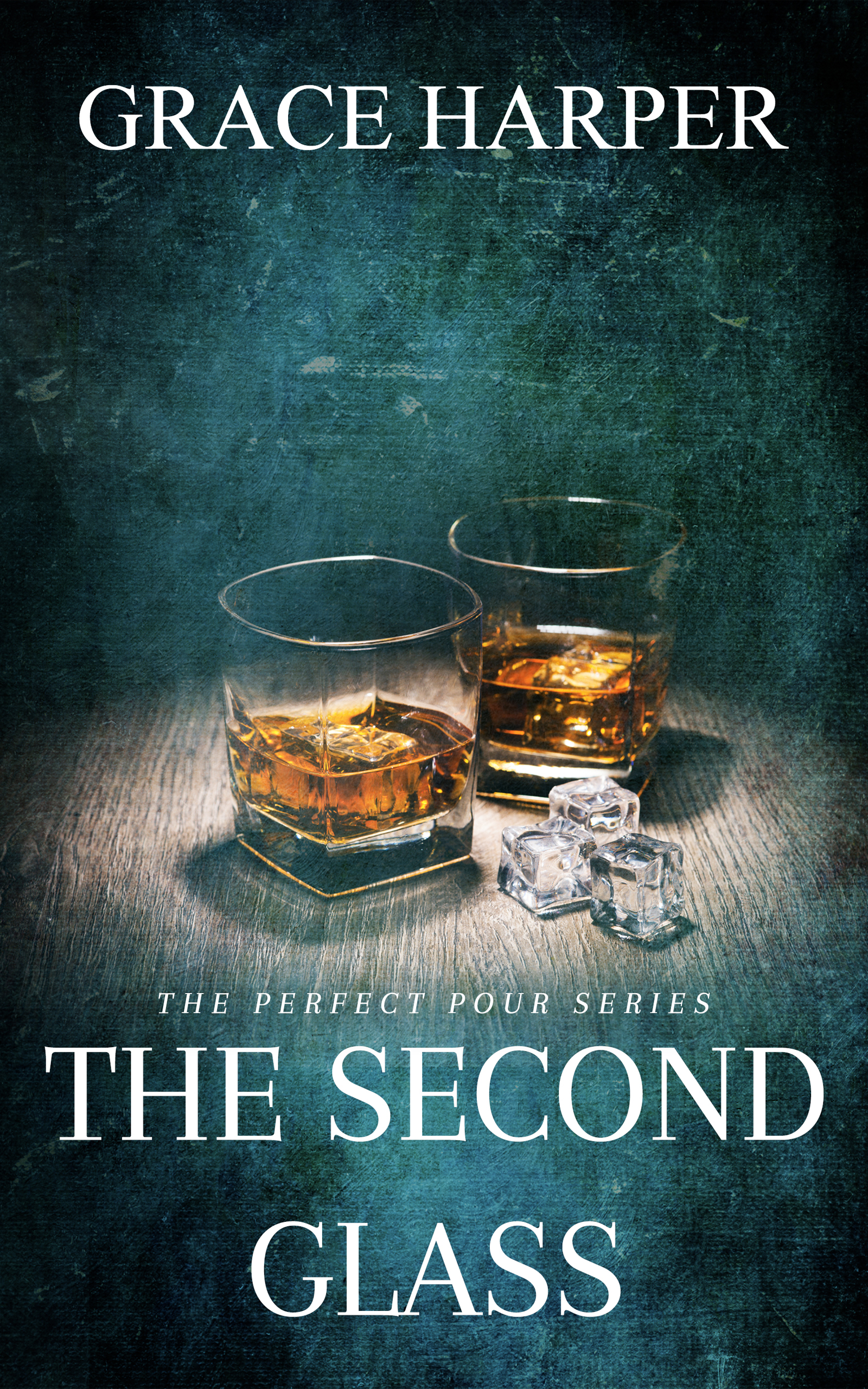
My next release is THE SECOND GLASS
Here is chapter one
Chapter 1
Toby
I cross to the far wall where the guitar hangs on its bracket. An old Yamaha acoustic, nothing fancy, the finish worn smooth along the neck from years of handling. I unhook it carefully and rest it against the back wall. Then I drag a barstool from the high tops in front of the stage to the one spot in the room I know can’t be seen from the windows.
It’s been a while, but muscle memory takes over. I sit with my back flush against the stone and balance the guitar across my thighs.
The first chord is G. My fingers find it without looking, without thinking. The sound fills the empty bar, hollow and resonant, bouncing off the timber and the velvet curtains and the low ceiling with nowhere else to go. My right hand falls into the pattern it knows by heart, a slow rolling strum that doesn’t belong to any song but lives in my head. When I play like this, my brain zeroes in on one thing.
Skye DeFore.
I don’t think about her until one in the morning in an empty bar with a guitar in my hands and nobody around to notice if the playing gets sloppy or the rhythm falters.
But my fingers remember what my brain has tried very hard to forget. This is the progression I used to play on her porch on summer nights when the fireflies were out and the air smelled like cut grass. She’d hum along even when she didn’t know the song, her voice threading through the chords like something woven.
Two years. Two years since she left Ashford Hollow after I ended the engagement.
Skye saw through me faster than anyone ever has, before or since. She saw the gap between the man I am in crowded rooms and the man I become when the doors close and the show’s over. She saw it, and she loved both versions. I ended it because I was terrified of being the thing she needed me to be and failing at it, the way my father failed at being the thing we needed him to be, leaving too many conversations unfinished.
And now she must be back.
I haven’t seen her once. Not on Main. Not at Mabel’s. Not through this door, though God knows I’ve looked up every time it opens.
The chords slow. My right hand falters, then finds the rhythm again. The notes are hollow now in a way they weren’t at the beginning. Not empty. Just carrying the shape of a space that used to hold something and doesn’t anymore.
I play until my fingertips ache and the single bulb above the register seems too bright. Then I stop, and the last chord hangs in the air and fades into the silence of the bar.
My weekly ritual is done. This is the only time I let myself think about Skye and let the pain sear straight through. For the rest of the week, I’m the showman.
I stand and replace the guitar on its bracket. My fingers brush the worn finish one last time, a gesture that feels like a vow, though I’m not entirely sure what I’m promising.
I grab my jacket, kill the lights, and check the furthest corner behind the bar, the one nobody would think to check. Then I step out the back and haul on the door to make sure it’s held. From the inside, a push bar lets you out. To get in, you punch in a code and pull the handle within ten seconds. I yank on it now. It doesn’t budge.
The July night is cool against my skin after twelve hours in the bar’s heat. Main Street is empty, just the streetlights and the shadows they throw and the far-off sound of the Hollow River running its steady course toward wherever rivers go when they leave small towns behind.
Before I walk home, I check the false door’s lock.
That’s secure too.
It always is. And I check it anyway, because a man in a good suit has been asking questions about this building for a month now, and the last time Marcus Keane asked a question he didn’t like the answer to, he found another way to ask it.
~~~
The following night I’m making a round of whiskey sours for four women in the first booth by the pool table when my mom sidles up to the bar.
“Hey, Mom. You okay?”
“All good. Listen, Angela, Jill, and I are going out for drinks in the next town tomorrow night. Could you give us a ride?”
“Sure.”
She pulls a face like someone’s let her down. “One of the girls who was driving has called off, but we still want to go.”
“It’s not a problem. I’ll pick you up too, save you waiting on an Uber.”
She reaches out and grabs my wrist where it’s resting on the bar top, and squeezes it tight. “You’re the best son in the world.”
“And you’re the best mom in the world. Do Wilson and Pierce know you’re taking their moms out to get tipsy?”
“Not yet.” She chuckles. “I thought I’d tap you up first.”
“Hey, Phyllis.” Walt, from his stool, third from the end. “If one of the boys can’t come get you, I’ll drive over and pick you up.”
Mom turns toward him. “That would be great. So we’re more than covered.”
“Totally, Mom,” I say, nodding to Walt, who raises his whiskey a quarter inch. “You can let your hair down.”
“Great.” She still hasn’t let go of my wrist, and I don’t think she’s noticed. Then she loosens her grip and pats the back of my hand. “I’ll let you get back to your customers.”
But she doesn’t move. Doesn’t let go. “Do you know if she’s back yet?” she says.
I know who she means. Everyone in this town knows who she means.
I shake my head. “I don’t, no.”
“You could go see. At the DeFore house.”
“Maybe, Mom, she might not be back yet. Aside from that, I hurt her.”
“If she loves you, she’ll find a way to forgive you.”
“Maybe,” I say. “Maybe.”
With a double pat on my arm, she’s on the move, forging a path through the throng and out the door. My mom has no off switch. She says if she sits still too long, her lazy gene comes out to play. I’ve never once seen evidence of a lazy gene. She’s been a single mom my whole life, and I never suffered for it.
The rail is full of regulars tonight. Walt in his spot. Eli two stools down, nursing a beer and watching the pool game. The three women from the real estate office are debating property values loud enough that I catch every word from behind the bar. The room has layers to it. Pool balls cracking, glasses clinking, laughter rising and falling in waves, and under all of it the steady hum of Wilson’s exhaust fan through the wedged-open swing door, where he’s been running the flat-top since five.
Rosa moves past me to the well, her auburn hair tied back in the low braid she wears on busy nights. She reaches for the vodka, and Pierce is already sliding the bottle toward her, their hands brushing for half a second before she turns back to her station. No words. No nod. Just the clean synchronicity of two people who’ve learned each other’s rhythms so completely that talking about it would ruin the effect. She pours a perfect cosmo without measuring, slides it to Nadia at the far end, and catches Nadia’s card on the return slide without looking.
Pierce works the register with a focus that would look severe if you didn’t know him. But there’s something different in the set of his shoulders tonight. Something looser. The man has smiled three times in the last hour. Three. I’m counting. Three months ago he’d have gone a week without cracking once.
“Toby,” Irwin, our newest barman, says from his end. “Whiskey with ice for the table by the door. Three.”
“On it.”
I pivot to the well, grab the Jameson, pour three neat doubles without breaking stride, and hand the tray to Rosa, who delivers them to a table too deep in some argument to thank her. Rosa doesn’t need the thanks. She’s already back at her station, wiping the rail with the cloth she keeps in her back pocket, her silver cuff catching the light every time she moves her wrist.
The rush hits at eight-fifteen. Twenty people through the door in ten minutes, the pool table triple-booked, the booths filling with bodies and voices and the good chaos of a summer Friday when the temperature outside has finally dropped below eighty, and everyone in town remembers that drinking in a bar with friends beats sweating alone on a porch.
For three solid minutes, four of us are in motion without a word passing between us. Wilson pushes six plates across the pass in rapid succession, and Carla runs them out. Pierce takes the register and the top-shelf orders. Rosa works the well and the rail. I cover the pool table side and the high tops. Irwin, Orson, and Ray handle the rest. Glasses slide. Bottles move. Ice rattles. We move around each other like parts of one machine, stepping left when someone steps right, reaching across without colliding, the whole thing running on muscle memory and trust.
It’s the closest thing to loving my job I’ve ever known.
Somewhere in the middle of it, the door goes.
I look up. It’s a woman I don’t know, a summer visitor in a sundress. It’s not her, so I go back to the sours.
Last call rings out. Stragglers drain their glasses, ready or not. Cues get racked, coats gathered, goodnights traded with the easy familiarity of people who’ll see each other tomorrow, or the day after, in a town where running into someone twice in twenty-four hours is more rule than exception.
Rosa flips the stools onto the tables. Three months ago she was asking which way they went. Now she’s moving down the line like she designed the place. Pierce drains the taps, the lines gurgling, the smell of hops rising and fading. Wilson emerges from the back corridor, gives a nod and a goodnight, and disappears upstairs to his apartment. I wipe the mahogany in long, even strokes until it gleams.
Nobody talks. We all want our beds.
Twenty minutes and the place is put to bed. Register counted and locked, front door deadbolted from the inside. The three of us gather at the bar for one pour each, no ice, the good bourbon that lives on the top shelf for exactly this.
“Good crowd tonight,” Rosa says, quiet in the empty room. She’s leaning against the rail beside Pierce, close enough that their shoulders touch.
“Summer crowd,” I say. “They’ll thin out by August when the heat gets brutal and everyone remembers a porch and a fan is easier than a bar full of sweaty people.”
“Speak for yourself,” Pierce says. “I like the heat.”
“You’re weird.”
He smiles. The man’s capacity for joy has expanded about fifty percent since Rosa showed up, which by Pierce Reid standards is basically euphoria.
Rosa sets her glass down with a soft click, looks at Pierce, and whatever passes between them is private enough that I turn away to give them the half-second of dignity they deserve. When I look back, they’re gathering their things. Pierce reaches for his jacket, Rosa sliding her phone into her back pocket, the two of them moving through the familiar dance of people leaving together.
“Lock the back on your way out?” Pierce says.
“Will do.”
He holds out his hand, and Rosa takes it without hesitation, and they move together through the darkened bar, past the upended stools and the empty pool table and the quiet machinery of a place at rest. Pierce holds the front door for her, and they step out into the July night. His broad shoulders against the streetlight, her braid catching the glow as they turn toward the river path that leads to Mill Cottage.
The door swings shut behind them.
I lock it. Slide the deadbolt home. Check it twice, the way Pierce taught me eleven years ago when we were young and stupid and thought checking twice was paranoid rather than prudent.
It’s about time one of us got some happiness in our lives.
I finish my bourbon in the dark, and I let myself have that thought for exactly as long as it takes to drain the glass.
Then I go and do the thing I do now.
Back door. Push bar. Code. I check the false door’s lock, and it’s secure, and I check it again.
Three weeks ago, a man came through this town asking about the history of this building, its foundations, whether the original cellar ran the full length of the block. He asked in a good suit with a friendly smile, and every one of us politely told him nothing. He offered obscene money to buy the bar and was told emphatically no.
Marcus Keane isn’t the kind of man who likes hearing no, and we know he isn’t done getting our bar. He’s just getting to know the locks.
I pull the door shut behind me and stand a moment on the dark sidewalk.

